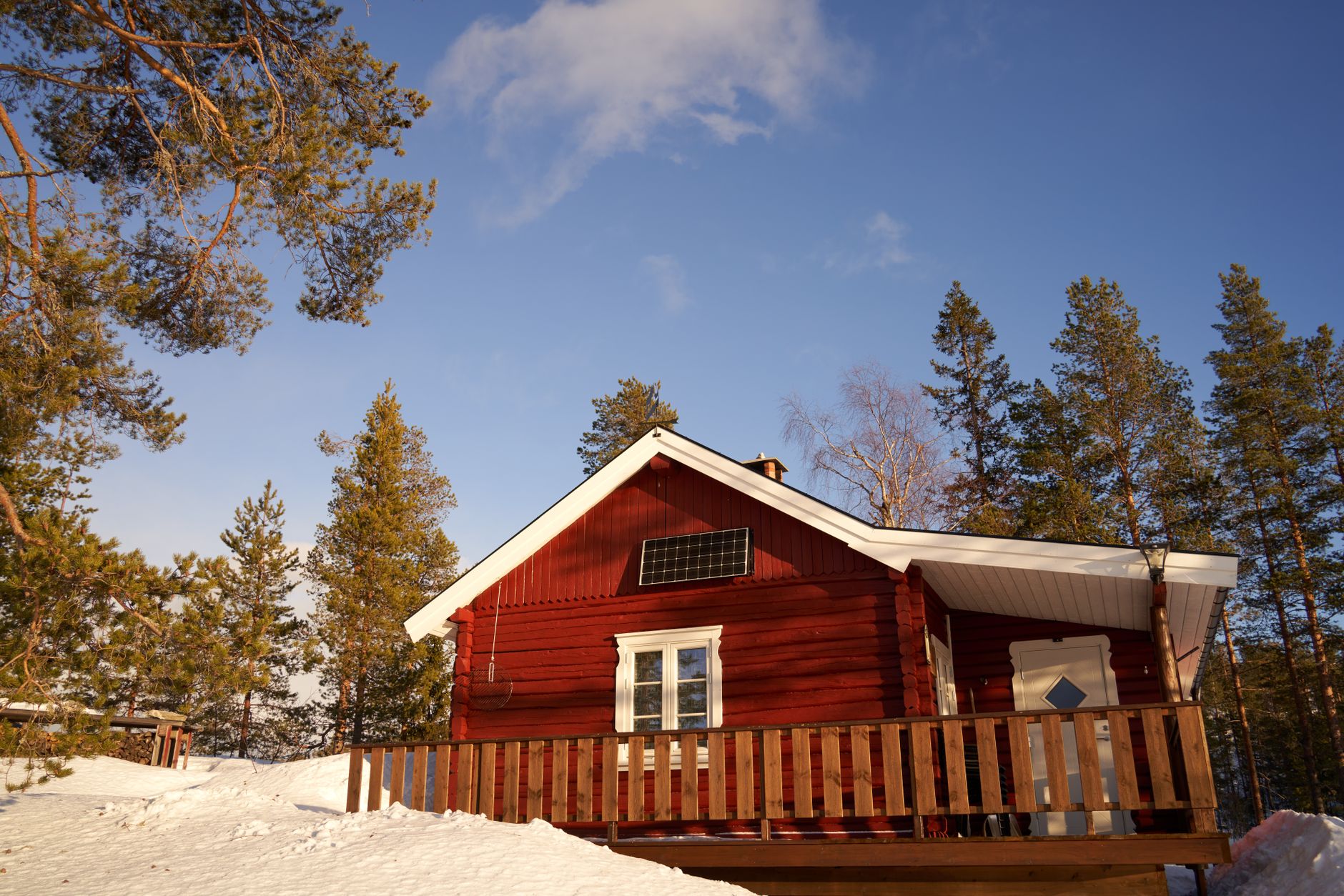
Outdoor lighting is the quietest load in your house. It runs twelve hours a night, every night, and nobody thinks about it until the bill shows up or the grid goes down. A single hardwired 60-watt porch fixture on dusk-to-dawn burns about 0.72 kWh a night, which is 260 kWh a year of pure waste. Multiply that by a driveway post lamp, two garage floods, and a set of path lights and the number gets real fast. Solar lights delete that load entirely. They never touch the grid, so they also keep working when the grid does not. If you have ever fumbled for a flashlight during an outage, that matters. Our outage preparation guide covers the rest of the kit.
I compared more than thirty fixtures across six categories: path lights, lamp posts, motion security floods, string lights, outbuilding lights, and portable indoor lanterns. The scoring came down to five things. Does the panel actually recharge the battery in four to five hours of winter sun? Is the battery replaceable, or is the whole fixture trash in year three? What is the honest light output, not the number printed on the box? Does the housing carry a wet-location listing? And how does it behave when the power is out? Safety and code matter here too. The National Electrical Code requires a lighting outlet at every outdoor entrance to a dwelling, so solar lights supplement a hardwired fixture rather than replacing it. ENERGY STAR’s lighting program is a useful reference for what a certified outdoor fixture should include.
Here is the part the box does not tell you. Solar lights are dim. A 200-lumen solar flood will not light a basketball court, and a 50-lumen path light will not light a patio. Panel soiling cuts output fast. A month of pollen and bird droppings can drop charging by a third. December is brutal, with some northern locations getting two to three usable peak sun hours a day. And the lithium cells buried inside these fixtures are rated for roughly 500 to 1,000 full cycles, which is two to four years of nightly use. If you want outdoor light that never dims and never quits, you want a hardwired fixture fed by a home battery.
Think of solar lighting as the first rung of the ladder. It is the cheapest way to cut a grid load, it works during an outage, and it teaches you how solar harvest, storage, and load sizing actually behave in your own yard. From there the same math scales up. A shed light kit becomes a small off-grid power system, and a small off-grid system turns into a question about whether a battery or a generator makes more sense for the house. We broke that choice down in our battery vs generator vs solar comparison. Start with the lights. They are cheap, they are honest about what they can do, and they pay for themselves without a single permit.
How Do the Top Options Compare?
| Solar Light | Best For | Peak Output | Nightly Runtime | Battery | Price |
|---|---|---|---|---|---|
| Ring Solar Pathlight | Smart path marking | About 50 lumens | 8 to 10 hours | Sealed lithium | Check price |
| Gama Sonic solar lamp post | Driveways and curb appeal | 100 to 150 lumens | 8 to 12 hours | Replaceable lithium pack | Check price |
| Aootek solar motion light | Security and dark corners | 300 to 600 lumens on motion | 2 to 3 nights per charge | Lithium, three modes | Check price |
| Brightech Ambience Pro | Patios and decks | 12 warm-white bulbs | 6 to 8 hours | Integrated lithium in panel | Check price |
| Sunforce solar shed light | Outbuildings and coops | About 800 lumens | 4 to 6 hours at full | Rechargeable pack | Check price |
| Goal Zero Lighthouse 600 | Indoor outage light | 600 lumens | 2.5 to 48 hours | Built-in lithium, USB plus crank | Check price |
Output and runtime figures are manufacturer ratings rounded for comparison. Real numbers depend on panel placement, shading, panel cleanliness, and winter sun hours. No prices are listed here because solar lighting prices move constantly and vary by pack size.
1. Ring Solar Pathlight , Best Smart Path Light
Ring’s solar pathlight is the one I recommend when a homeowner already has Ring cameras and wants path lighting that behaves like part of the same system. It stakes into the ground, charges from a small top-mounted panel, and turns on at dusk. Output is modest, roughly 50 lumens, which is enough to mark the edge of a walkway and not much else. If you want to read a book on the patio at 11 p.m., this is not the fixture for that job.
The real story is scheduling and control. With a Ring Bridge, you can group pathlights, set them to come on at sunset, and trigger them from a motion event on a camera. Without the Bridge, they are plain dusk-to-dawn lights and honestly overpriced for that role. Budget for the Bridge. Check the Ring Solar Pathlight on Amazon.
Runtime lands around 8 to 10 hours on a full charge in summer, shorter in December when the panel might see three hours of weak sun. The battery is a small lithium cell and it is not designed for easy field replacement, so treat these as a five-year purchase. For the cost of six of them you could put that money toward a whole-home battery and stop thinking about garden lights entirely. But if you want zero wiring, zero trenching, and zero electrician, this works.
Key strengths:
- ✅ Smart control through the Ring app, including schedules, groups, and camera-triggered scenes
- ✅ No wiring at all, so installation is a stake in the ground and a five-minute setup
- ✅ Weather-sealed housing handles rain and sprinkler overspray without issue
- ✅ Low-profile design that looks like a normal path light and passes most HOA rules
- ❌ Roughly 50 lumens, which marks a path rather than actually lighting one
- ❌ Smart features require the Ring Bridge, sold separately
- ❌ Battery is not easily replaceable, which caps the service life at around five years
Who it’s for: Homeowners already running Ring cameras who want matching path lighting with app control and no wiring.
2. Gama Sonic Solar Lamp Post , Best for Driveways and Curb Appeal
Gama Sonic builds the fixture people actually mistake for a wired lamp post. The Baytown and Polaris lines use a cast-aluminum head, a glass or polycarbonate lens, and a lithium battery pack you can swap out with a screwdriver. Output runs roughly 100 to 150 lumens depending on the model and the brightness setting, which is plenty to light a walkway and make the house numbers readable from the street.
The reason this earns a slot is mountability. Gama Sonic sells the same head with a post mount, a pier mount for a brick column, and a wall bracket, so you can match the fixture to whatever your driveway already has. That flexibility is rare in solar lighting, and it means you can retire a tired 60-watt incandescent post lamp that burns 0.72 kWh a night for nothing.
Real-world runtime is 8 to 12 hours when the panel gets five hours of direct sun. Shade is the enemy. One branch hanging over the panel and you drop to six hours. Before you buy, check how much usable sun your location gets in December. NREL’s solar resource data shows the seasonal swing clearly, and December is the month that sizes your panel, not June.
The battery pack is the other selling point. Gama Sonic sells replacements, so a fixture that costs real money on day one is still working in year eight. That is not true of most of the cheap units on this list.
Key strengths:
- ✅ Cast-aluminum and glass construction that holds up outdoors for years
- ✅ Multiple mount options: post, pier, and wall, so it fits the property you already have
- ✅ Replaceable lithium battery pack extends the service life well past the warranty
- ✅ Style close enough to a wired lamp post that neighbors will not notice the difference
- ❌ Higher upfront cost than a stake-mounted path light, by a wide margin
- ❌ Output still trails a hardwired post lamp, so it will not flood a driveway
- ❌ Performance collapses in heavy shade, which rules out tree-covered front yards
Who it’s for: Homeowners replacing a hardwired post lamp who want the same look without trenching a 120-volt circuit.
3. Aootek Solar Motion Sensor Lights , Best Budget Security Light
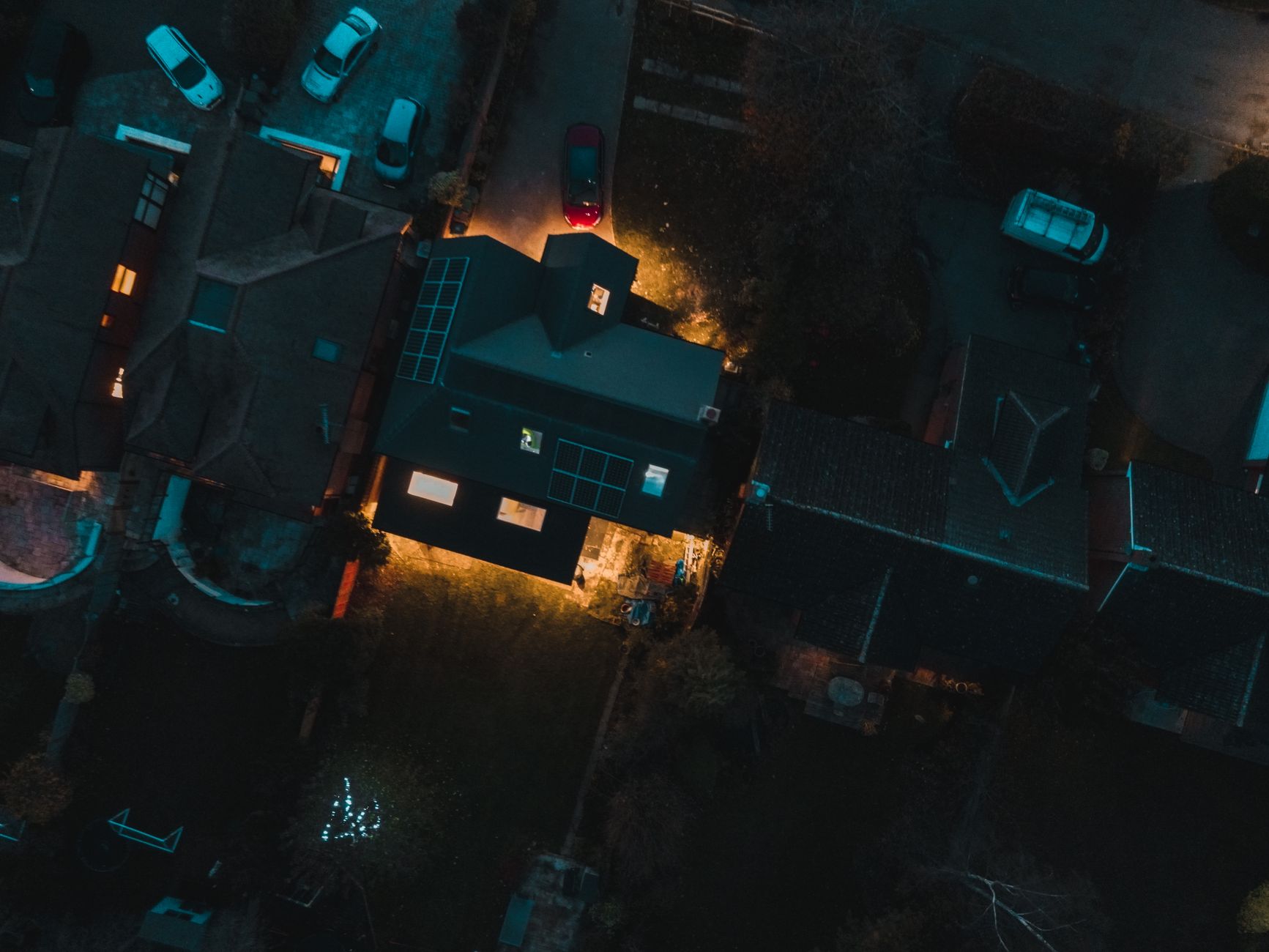
A three-pack of solar motion lights is the cheapest security upgrade on this list. Mount one over the garage door, one on the back corner of the house, and one over a side gate. Each unit has its own panel on top, a passive infrared sensor with roughly a 120-degree field and a 26-foot detection range, and three modes you pick with a small button. Mode one is motion only. Mode two holds a dim glow at about 20 percent and jumps to full brightness for 20 to 30 seconds when something moves. Mode three is constant on, which will drain the battery before dawn in winter. Check the Aootek solar motion lights on Amazon.
Peak output is a few hundred lumens on the better models, and some spec sheets inflate that number to four digits. What matters is standby draw. In mode two these lights sip power all night from a single charge and often run two to three nights on one decent day of sun. Compare that to two 15-watt hardwired floodlights on dusk-to-dawn. Those pull about 0.3 kWh a night, roughly 110 kWh a year, and they go dark the moment the grid does. Our guide to cutting your electric bill walks through the rest of the outdoor loads.
Build quality is where the budget units show their age. The housings are ABS plastic, the brackets are thin, and the LEDs are not serviceable. Expect three to five years. Buy from a seller that stocks replacement batteries and you will stretch that.
Key strengths:
- ✅ Motion-triggered output of several hundred lumens from a fixture with no wiring
- ✅ Three operating modes, including a low standby glow that holds charge for two to three nights
- ✅ Runs when the grid is down, which hardwired security floods cannot do
- ✅ Roughly 26-foot detection range covers a driveway, gate, or side yard
- ❌ ABS plastic housings and thin brackets that degrade in two to three years of direct sun
- ❌ PIR sensors false-trigger on car headlights and passing animals
- ❌ Lumen ratings on the box are frequently inflated compared to measured output
Who it’s for: Renters and homeowners who want security lighting on a dark side yard without paying an electrician.
4. Brightech Ambience Pro Solar String Lights , Best Solar String Lights
String lights are the one category where solar genuinely competes with plug-in on looks. The Ambience Pro setup runs 12 warm-white bulbs on a 27-foot strand, with a small panel and battery pack at the end of the run instead of a cord snaking back to an outlet. Color temperature lands around 2700K, which is the soft amber you want over a patio table, not the blue-white glare of a work light.
Runtime is 6 to 8 hours after roughly 6 hours of charge. That is shorter than the path lights, because 12 bulbs draw more than one LED. It is also the honest weak point. If you run a party until 1 a.m., the last hour gets dim. The battery lives in the panel housing, not in the bulbs, and it is not user-replaceable on most units, so plan on replacing the whole set in three or four years.
The bulbs are plastic, not glass. That sounds like a downside and it is actually not, because these hang over a deck where a dropped glass bulb would shatter. The strand is weather-rated and survives rain, but it is not rated for permanent burial or for being run through standing water.
One more note on placement. The panel has to see sun, and sun is exactly what a shaded patio does not have. Run the panel to the sunniest corner of the roof or fence and accept the extra cable. Every hour of shade on that panel is an hour of darkness later.
Key strengths:
- ✅ Warm 2700K light that reads as decorative, not utilitarian
- ✅ No extension cord across the patio, which removes a trip hazard and a code question
- ✅ Shatter-resistant plastic bulbs suited to outdoor decks and pergolas
- ✅ Long strand length covers a full patio or a small pergola in one run
- ❌ Runtime drops to 6 to 8 hours, so late parties end in dim light
- ❌ Battery is not replaceable on most units, which limits the whole set to three or four years
- ❌ Panel must be placed in full sun even when the patio itself is shaded
Who it’s for: Anyone who wants patio ambiance without running an outdoor extension cord or adding an exterior outlet.
5. Sunforce Solar Shed Light , Best for Sheds and Outbuildings
This is the fixture that lets you stop dragging an extension cord across the yard. A small panel mounts on the shed roof, a cable runs to a 60-LED head inside, and a pull chain or motion sensor turns it on. Manufacturer ratings put the output near 800 lumens, which is enough to find a tool, read a label, or check on hens without a headlamp. Runtime is 4 to 6 hours at full brightness and considerably longer on a low setting.
For a chicken coop, a detached garage, or a garden shed with no service panel, this is the difference between a usable building and a storage box you avoid after dark. It also does real work during an outage. The shed stays lit while the house is dark, and you can stage flashlights, water, and a radio out there without burning a single watt from your backup system.
If the shed is part of a bigger plan, run the loads through the battery sizing math before you buy fixtures. A shed with a freezer, a welder, and a compressor is not an 800-lumen problem, it is a circuit problem, and that changes the equipment list.
The install is genuinely doable by a homeowner: screw the panel to the roof, drill one hole for the cable, and mount the head. No 120-volt wiring, no permit, no inspector.
Key strengths:
- ✅ Lights an unpowered building with no trenching, no panel upgrade, and no permit
- ✅ About 800 lumens at full brightness, enough for real work inside a shed
- ✅ Long cable run keeps the panel in sun while the light stays where you need it
- ✅ Independent of the house electrical system during an outage
- ❌ Runtime of 4 to 6 hours at full brightness is short for all-day winter use
- ❌ Bulkier and less attractive than a hardwired LED shop light
- ❌ Cable routing through a roof or wall requires careful sealing to avoid leaks
Who it’s for: Owners of sheds, coops, and detached garages that have no electrical service and never will.
6. Goal Zero Lighthouse 600 , Best Portable Outage Lantern
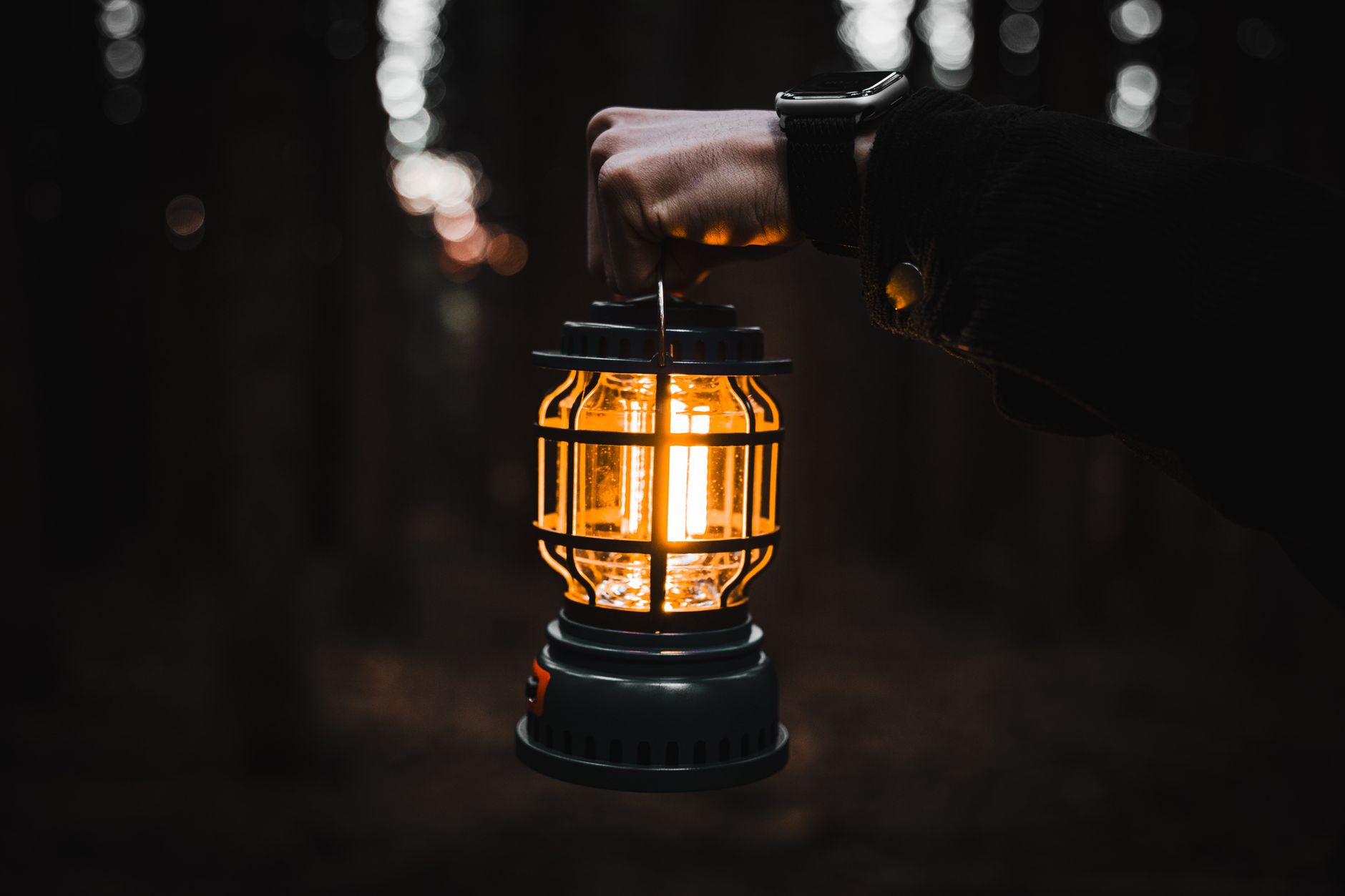
Every household that has lost power at 2 a.m. should own one of these. The Lighthouse 600 puts out 600 lumens at its brightest setting, drops through four lower levels, and runs up to 48 hours on the lowest one. It recharges by USB-C from a wall outlet, a car, or a folding solar panel, and it has a hand crank that will keep the light alive indefinitely if the grid stays down for days. That crank is the feature that separates it from a phone power bank with a bulb taped on.
It also charges a phone, which matters more than most people expect. Three days into an outage, a working phone is how you find a grocery store with a generator and how you tell family you are fine. A light that also tops up a phone is doing two jobs with one battery.
This is not the same category as the outdoor fixtures. It is indoor light, and it is the one you grab when the hallway goes black. Pair it with a headlamp and a couple of charged power stations and you have covered the lighting portion of an outage plan completely. EnergySage publishes current cost data if you want to compare that small spend against whole-home storage.
One caution that applies to any lantern. Do not run one on high all night in a closed room. It is not a fire hazard at this power level, but it will run the battery flat by morning and there is no reason to light an entire bedroom at 600 lumens.
Key strengths:
- ✅ Up to 48 hours of runtime on the low setting from one charge
- ✅ Hand crank provides indefinite light when there is no sun and no outlet
- ✅ Doubles as a phone charger, covering two outage needs with one device
- ✅ Recharges from USB-C, a car port, or a folding solar panel
- ❌ Costs far more per lumen than a simple solar path light
- ❌ High output drains the battery in a few hours, so it is not an all-night task light
- ❌ Hand cranking is slow and tiring if you rely on it as your only recharge method
Who it’s for: Any household building a basic outage kit that wants one light that survives a multi-day blackout.
Frequently Asked Questions
How many lumens do I need from a solar light?
Twenty to fifty lumens marks a walkway without blinding anyone. One hundred to three hundred lumens lights a step or a doorway. Five hundred lumens and up is security territory. Anything over 1,000 lumens from a solar fixture is either a very large panel or a marketing number.
Do solar lights still work in winter and on cloudy days?
They work, but they run shorter. A panel that sees five peak sun hours in June may see two in December at northern latitudes. Expect roughly 40 to 60 percent of summer runtime, and look for fixtures with a detachable panel you can aim at the strongest sun.
Can solar lights replace my porch light entirely?
No. The National Electrical Code requires a lighting outlet at every outdoor entrance to a dwelling, so you keep the hardwired fixture. Solar lights supplement it, handle the path and the yard, and keep working when the power is out.
How long do solar light batteries last?
Most lithium cells in these fixtures are rated for 500 to 1,000 full charge cycles, which is two to four years of nightly use. Nickel-metal hydride cells in cheap units often fail sooner. Buy fixtures with a replaceable battery pack and you double the service life.
Are solar lights useful during a power outage?
Yes, and this is their best trick. They never connect to the grid, so a blackout means nothing to them. A charged motion light on the side of the garage plus one portable lantern covers most of what a family needs for light after dark.
Should I buy solar lights instead of a home battery?
They are different scales of the same idea. Solar lights handle outdoor and emergency lighting for a few hundred dollars. A whole-home battery handles refrigeration, well pumps, and HVAC for thousands. Start with the lights, then size the battery around your real critical loads.
What Should You Remember?
- Start with runtime, not lumens. A fixture that claims 1,200 lumens and dies at midnight is worse than a 300-lumen light that runs until sunrise.
- Insist on a replaceable battery. Sealed packs turn a working fixture into landfill in year three. Replaceable lithium packs cost far less than a new light.
- Motion sensors buy standby time. Three-mode solar floods can hold a dim glow for two to three nights on a single decent charge.
- Winter is the real test. Size the panel for December sun, not June sun, or your lights will quit by 9 p.m. in January.
- Solar lights are the cheapest outage insurance you can buy. No transfer switch, no fuel, no carbon monoxide, no electrician.
- Keep your hardwired entrance light. Code requires it, and solar output is not a substitute for a 1,100-lumen porch fixture.
This article is for general information only. Home energy systems involve high-voltage electrical work, building codes, permits, and in some cases utility interconnection approvals , always consult a licensed electrician and your local authority before making purchase or installation decisions. Product specs, pricing, and incentives (including tax credits and net metering) change frequently; verify current details with the manufacturer and your utility.